Google Search is the most powerful intent channel in digital advertising. When someone types exactly what they need and your ad appears, that's not luck - it's precision. But precision in Search Ads requires real expertise: keyword architecture, match type strategy, negative keyword discipline, Smart Bidding direction, and daily human oversight.
Most PPC marketing agencies treat Search Ads as a set-and-monitor channel. Set up the keywords, write a few RSAs, let Google's automation handle the rest. That approach works well for Google's revenue. It works less well for yours.
ZATO brings senior-level strategy to every Search campaign - because the difference between a well-structured Search account and a mediocre one shows up every single day in your cost per conversion.
Automation amplifies whatever structure you give it. If your keyword architecture is messy, your match types are loose, and your negative keyword list is thin - Smart Bidding will optimize that chaos very efficiently. The algorithm doesn't know your account is broken. It just works with what you gave it. Structure has to come first, before automation can do anything useful.
Broad match and Smart Bidding can trigger your ads for queries that have nothing to do with what you sell. Without disciplined negative keyword management and match type strategy, you're paying for traffic that will never convert - and it's happening invisibly, query by query, every single day. Most accounts have significant budget bleed that nobody is looking for because it requires actual expertise to find.
You met with the senior strategist. Three weeks later your account is being managed by someone who's been doing PPC for 18 months. They can check dashboards and approve Google's recommendations - but they don't have the pattern recognition to know when Smart Bidding is behaving badly, when a keyword is cannibalizing another, or when the Auction Insights report is telling you something important.
Google Search Ads aren't complicated in theory. You choose keywords, write ads, set bids, and Google shows your ads to people searching for those terms. The complexity is in the execution: how your keywords are organized, how match types interact, how your negative keyword list shapes the traffic you get, and how Smart Bidding is given the right signals to work with.
ZATO's approach starts with structure. Before we touch bids, we make sure your account is built so that the right campaigns compete for the right queries - and the wrong queries can't bleed through. That means deliberate match type strategy, tiered campaign architecture, and a negative keyword discipline that most agencies skip because it's unglamorous work that takes real expertise.
ZATO has managed Google Search Ads for ecommerce and DTC brands since 2011 - through every major platform change, bidding system overhaul, and automation shift. That institutional knowledge shows up in how we structure your account from day one.
Smart Bidding is a powerful tool. It's not a strategy. The difference matters enormously to your account.
Kirk Williams has taught paid search strategy to agencies and in-house teams at conferences across North America and Europe. The expertise he shares publicly is the same expertise working on your account.
Every ZATO Search engagement follows the same sequence - because every high-performance Search account is built on the same foundation.
We start with a comprehensive audit of your existing account structure - or build from scratch if you're new to Search. We look at keyword organization, match type distribution, negative keyword coverage, campaign budget allocation, and Quality Score health across your top-spending ad groups.
Then we build (or rebuild) the architecture: how campaigns are structured to control query routing, how ad groups are organized for relevance, and how match types work together rather than against each other.
"Most of the work that improves Search performance is invisible to clients. It's structure, not spend."
We write Responsive Search Ads with actual strategy - not just filling asset slots. Headline pinning, message testing, and landing page alignment are all part of how we build ads that improve Quality Score over time.
Negative keyword management is an ongoing commitment. We review search term reports regularly, build out negatives at the campaign and account level, and make sure budget isn't leaking into the long tail of irrelevant queries that accumulate in every Search account over time.
"The search terms your ads are triggering for right now would probably surprise you. They'd probably concern you too."
Smart Bidding runs on your account - but a ZATO senior specialist is the head engineer. We set bid strategy parameters based on your actual margin structure, not Google's defaults. We monitor performance signals daily. We adjust targets when the market shifts, not when the quarterly review happens.
Monthly strategy reviews tied to your business metrics. Proactive communication when something changes. Full transparency into what's happening and why - without waiting for you to ask.
"We use Smart Bidding as a tool. We're the strategists behind it."
Google Search Ads are technically available to any agency. Managing them well at the level your brand needs is a different matter.
Founder Kirk Williams (@PPCKirk) has been one of the most recognized voices in paid search for over a decade. Named the #4 Most Influential PPC Expert in 2026. Author of multiple PPC books. A featured speaker at conferences across North America and Europe - teaching Search strategy, Smart Bidding methodology, and campaign architecture to agencies and in-house teams worldwide.
The ZATO team averages nearly a decade of experience per account manager - all senior specialists, no interns. The same expertise Kirk shares in his writing, conference talks, and industry content is what guides how your account is managed every single day.
When agencies need to upskill their teams on Google Search strategy, they read Kirk's content. When brands need that strategy applied to their own accounts, they hire ZATO.
ZATO sits at the top of the stack, but we've built resources at every level so you can find the right fit for where you are right now.
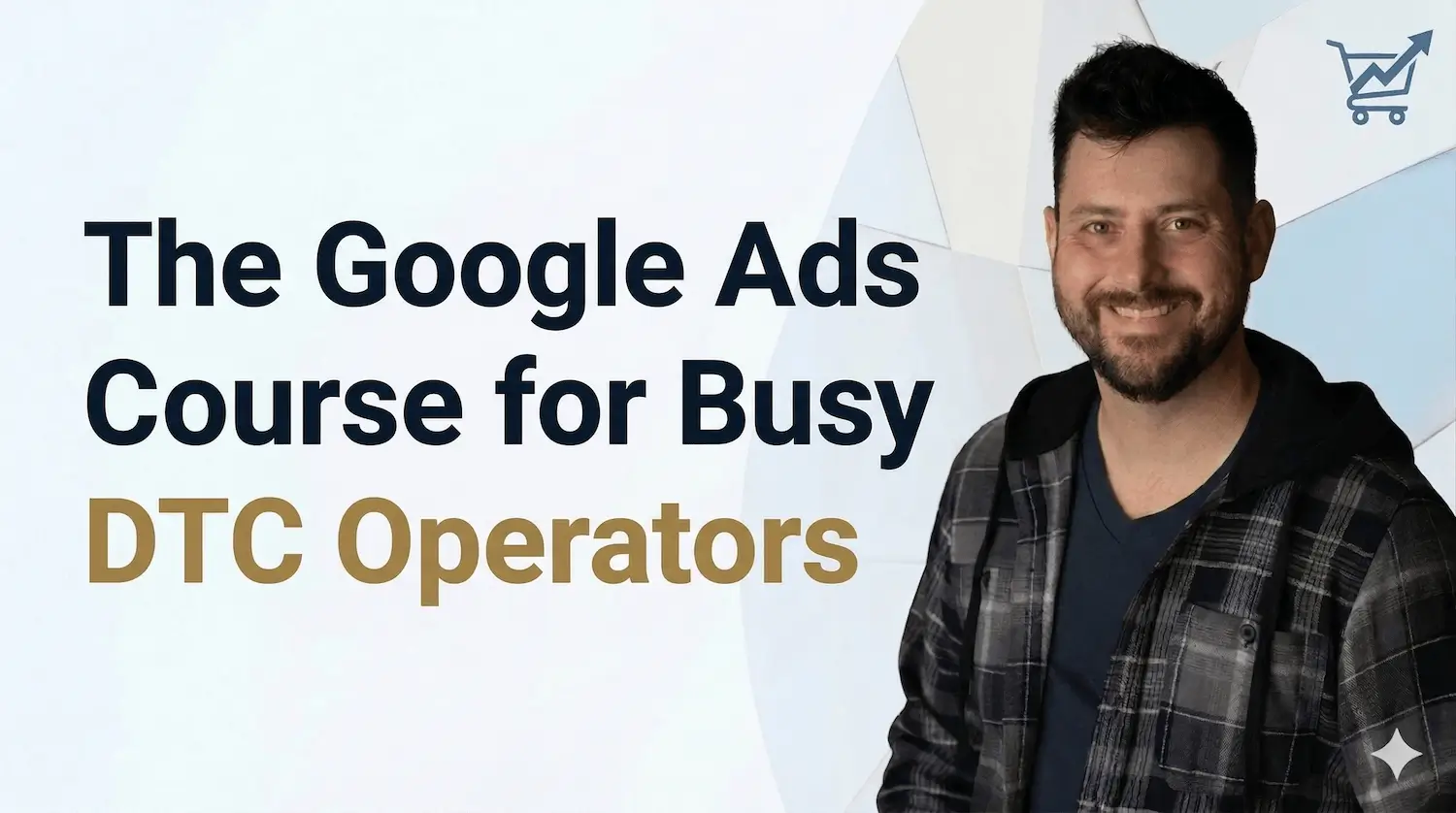
Built for founders and in-house marketers who want to learn Google Search Ads from a 16-year veteran. Covers only the things that actually matter for your store - not a generic Google certification course.

Expert PPC strategists who actively steer your Search campaigns, at a price point built for brands that aren't yet at full ZATO scale.
The right choice when your brand is spending $25K-$1M/mo on Search and the stakes are too high for anything less than true specialist management.
At its core, a Google Search Ads agency manages the campaigns that appear when someone searches on Google. At ZATO, that includes: keyword strategy and campaign architecture, match type management, negative keyword programs, Responsive Search Ad development, Smart Bidding strategy, landing page alignment review, Quality Score optimization, and ongoing performance management.
The difference between agencies is how deeply they do each of these things - and who is actually doing the work. At ZATO, every item on that list is handled by a senior specialist, not a coordinator or junior account manager.
Google Search Ads are keyword-driven: you choose the terms, write the ads, and have the most direct control over targeting. Ads appear in the text results when someone searches for your chosen keywords - making Search the highest-intent channel Google offers.
Google Shopping and Performance Max are product-feed-driven: Google uses your product data to decide where and when to show ads across its network. ZATO manages all three, and often recommends running Search, Shopping, and PMax together - each serving a different role in your overall account strategy.
It depends on your account's maturity, conversion data quality, and how well your negative keyword program is built. Broad match with Smart Bidding is powerful when the algorithm has strong signal and clear guardrails - and it can be wasteful when either of those conditions isn't met.
Google recommends broad match for almost everyone because it maximizes reach and spend. ZATO's recommendation is more nuanced: we look at your account's conversion history, the health of your existing structure, and whether Smart Bidding has the data it needs to use broad match responsibly. Sometimes the answer is yes. Sometimes it's not yet.
We use Smart Bidding as a tool, not as a strategy replacement. The way we set it up matters: what target you set, what conversion actions you're optimizing toward, what campaign structure gives the algorithm clean data to learn from, and what safeguards prevent the algorithm from making expensive mistakes.
Target ROAS, in particular, requires careful calibration. Setting targets too aggressively starves campaigns of traffic. Setting them too loosely sacrifices margin. ZATO specialists set and adjust these parameters based on your actual business economics - not on Google's suggested targets, which are generated to maximize volume.
More important than ever. As Google has expanded match types - especially the expansion of "exact" and "phrase" behavior - and as broad match has become more aggressive, the queries your ads trigger for can drift significantly from the keywords you intended to target.
A disciplined negative keyword program is one of the primary tools for maintaining control over where your Search budget goes. ZATO treats negative keyword management as an ongoing, systematic practice - not a one-time setup task. We review search term reports regularly and build out negatives proactively, rather than reactively cleaning up budget that already leaked.
Yes, and this is often how we work with clients. Search, Shopping, and Performance Max serve different functions and can complement each other well - when the relationship between them is actively managed.
PMax in particular can cannibalize Search traffic if the two aren't structured with deliberate separation in mind. A senior ZATO specialist manages the interaction between your campaign types as a whole-account strategy, not as isolated campaigns that happen to share a budget.
Structural improvements - cleaning up negative keywords, tightening match types, improving Quality Scores - can show up relatively quickly, sometimes within 2-4 weeks. Smart Bidding strategy changes typically take 4-6 weeks for the algorithm to stabilize and for performance data to be meaningful.
Honest expectation: Google Search is not a quick-flip channel. The brands that get the most from Search Ads are the ones that build solid foundations and work them consistently over months, not the ones chasing short-term tactics. ZATO is built for that kind of long-term relationship.
ZATO works best with ecommerce and DTC brands spending roughly $25,000 to $1,000,000 per month on Google Ads. At that range, your account is complex enough to benefit from senior specialist management - and the stakes are high enough that the quality difference between a senior specialist and a junior AM shows up meaningfully in your results.
We work across a wide range of product categories: apparel, outdoor/sporting goods, health and wellness, home goods, specialty retail, and more. If you're spending at meaningful scale and not getting senior attention on your account, that's exactly who we're built for. A free consultation will tell you quickly if there's a fit.
Book a free consultation. We'll audit your current Search setup, look at your keyword structure and match type strategy, and tell you honestly what we see - with no obligation.
No obligation. No pressure. Just a real conversation about your Google Search Ads.