.webp)
You Can Now Checkout in Microsoft’s Copilot. What Does This Mean For Your Business?
As Google is starting to roll out AI Agents across their Shopping network, Microsoft - meanwhile - has had the feature to use them to checkout since January. While previously a user may have had to spend days, weeks or months comparing products, checking prices, obtaining reviews and getting recommendations, AI has made all of these interactions possible within a single conversation, thereby collapsing the purchasing funnel, and both Google and Microsoft want to be there for it.
Copilot checkout is an agentic agent from Microsoft that provides product recommendations and the link to buy the product it recommends within one interface, thereby reducing any sort of friction a user might incur from making the purchase. The merchant owns the transaction, customer data and relationship, but Copilot does all the heavy lifting. Microsoft has indicated that product ads within Shopping and Pmax are both eligible for serving within Copilot and ads are created using your campaign’s existing assets.
Feed based ads in copilot will appear like this:
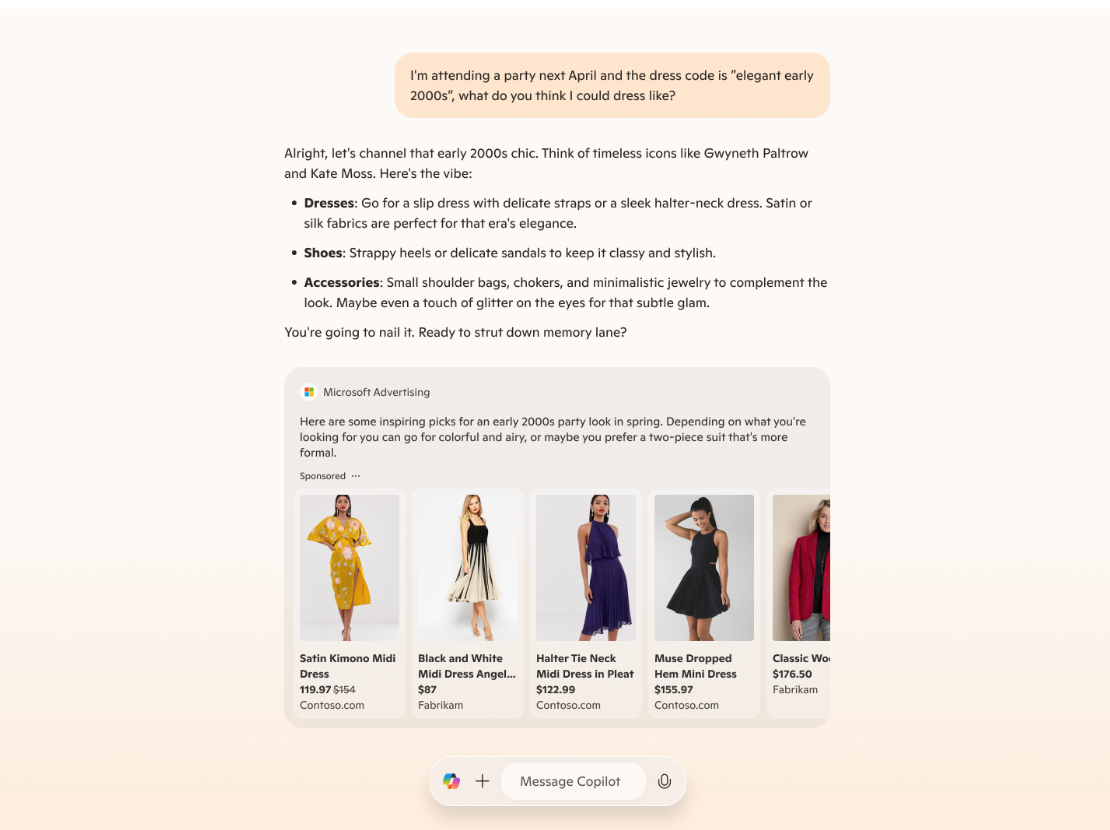
Microsoft does give us some indicators as to how our feed-based ads can more readily appear in Copilot. In this article we are told that Copilot will consider the context of the entire conversation and seek to surface ads that are relevant to it. In order to maximize Copilot exposure, use a logo and image extensions for search ads, but the best opportunities for appearing come with the use of a Performance Max campaign due to the amount of assets available to address the user’s query in a Copilot conversation.
As of this writing, Copilot checkout is only available within the US when a user searches through Copilot.com, Bing or Edge. Supported items will display a “buy” button.
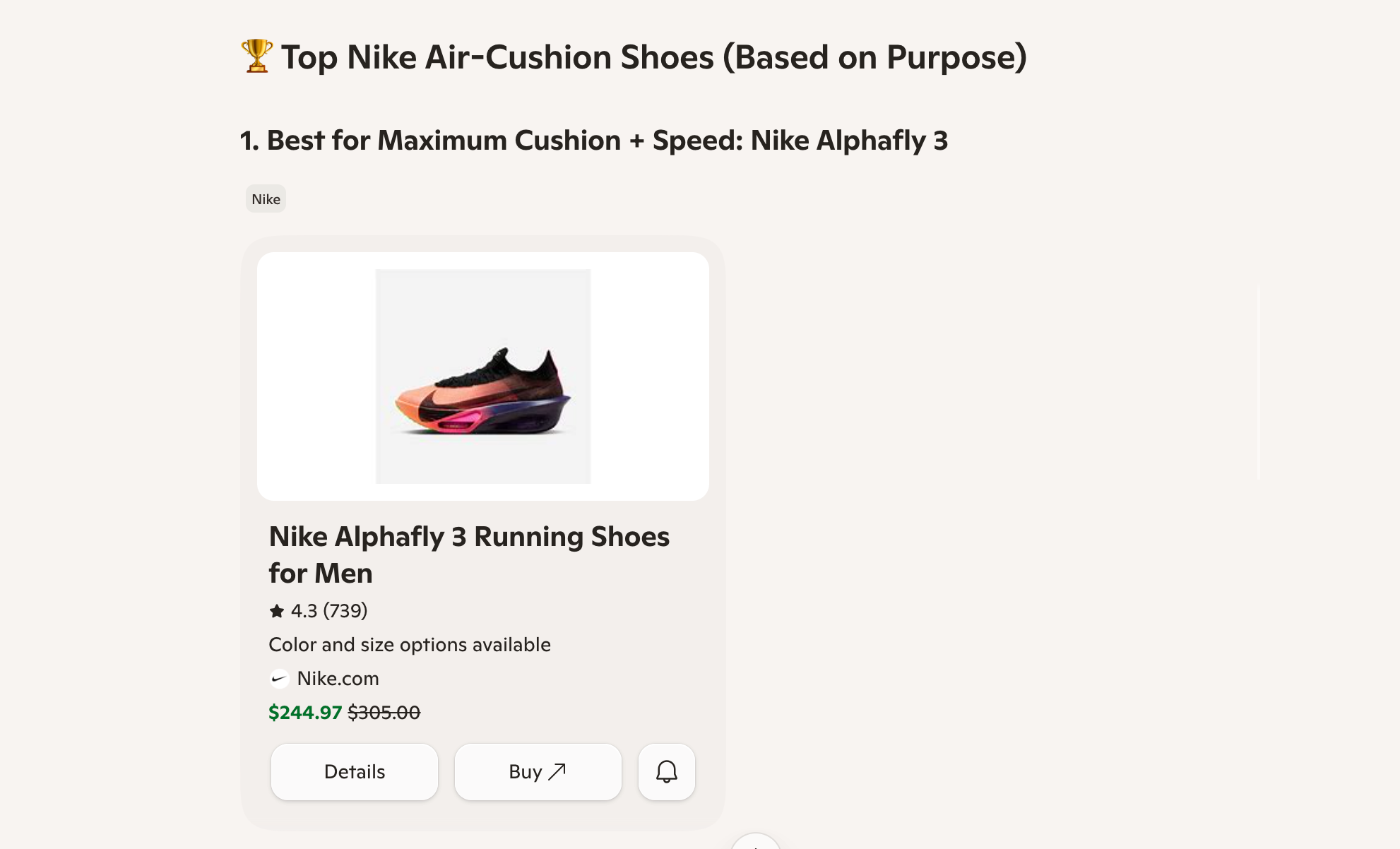
So, what does this mean for your business? First and foremost, it means that your product feed and crawlable site data are the most important metrics for Copilot to ingest to provide other users with this information. If you do not have the ability to calculate the total cost of your product (including shipping) without additional inputs, Copilot may favor a competitor over your business. Attributes in your feed that you may have once considered optional are now required if you want to remain competitive.
Also, because Microsoft indicates that you will still maintain Merchant of Record and we’ve already discussed how this functionality provides a more frictionless checkout experience, business owners need to be prepared how this move to agentic checkout agents will change reporting as we know it. Be prepared for less site clicks with a heavier focus on impressions within your Microsoft campaigns. You may even want to consider a shift towards “orders per impression.” The most sought after metrics will be visibility and the best indicators of that visibility will be the quality of your site and feed data.
The transition to agentic checkout agents like Copilot represents a significant change in the e-commerce landscape, collapsing the purchasing funnel and prioritizing speed and convenience. For your business to remain competitive and gain visibility, you must ensure your product feed and crawlable site data are impeccably accurate and complete, including the ability to calculate the total product cost, including shipping, without additional user input. Although you will retain the Merchant of Record, success will increasingly be measured by visibility and impressions - allowing for fewer site clicks and a potential shift in focus towards metrics like "orders per impression" within your Microsoft campaigns. Adapting your data quality and adjusting your reporting focus are the immediate steps required to thrive in this new agent-driven environment.