.webp)
Are Keywords Dead? What I Took Away From Google Marketing Live (In-Person!)
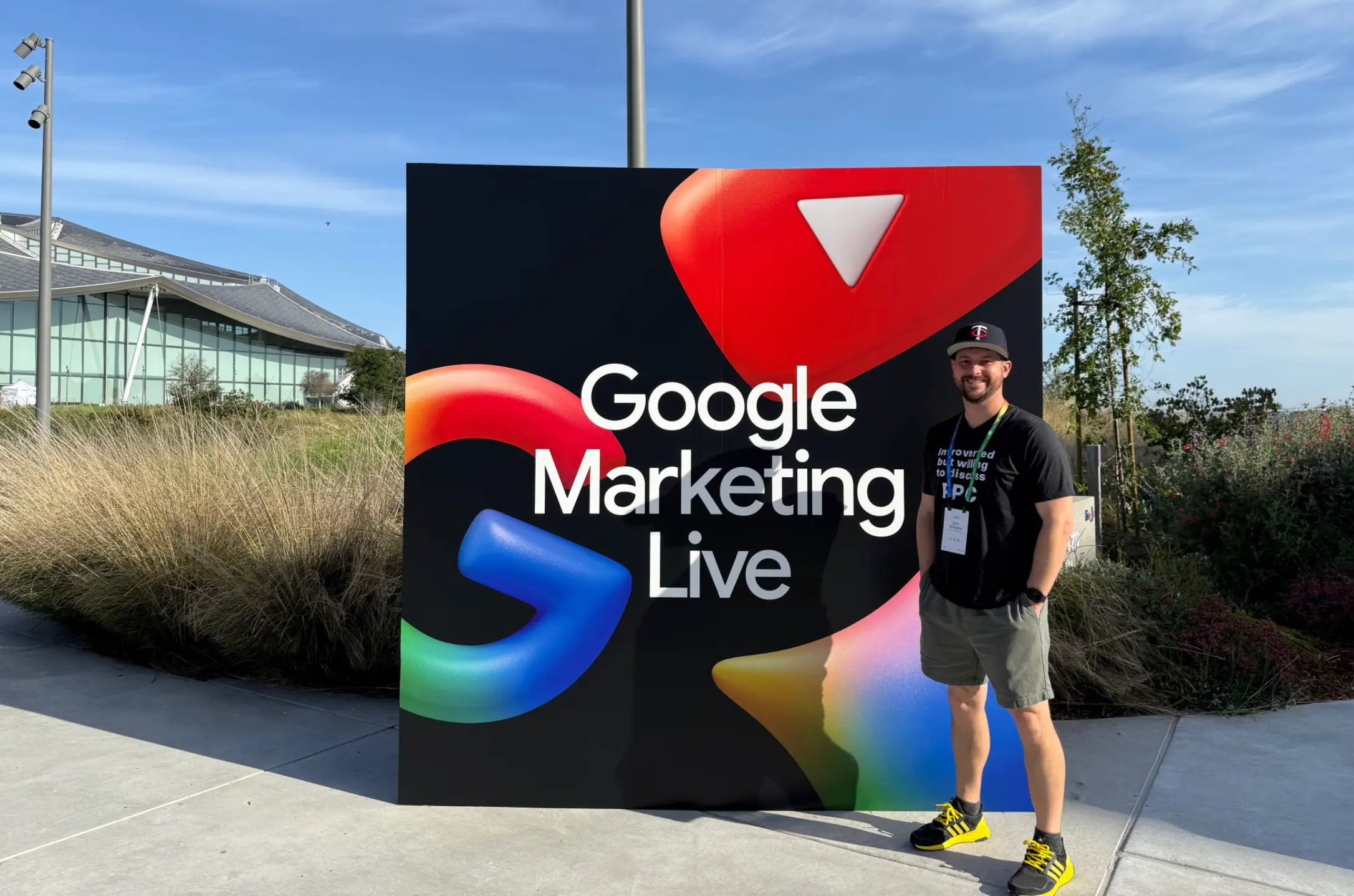
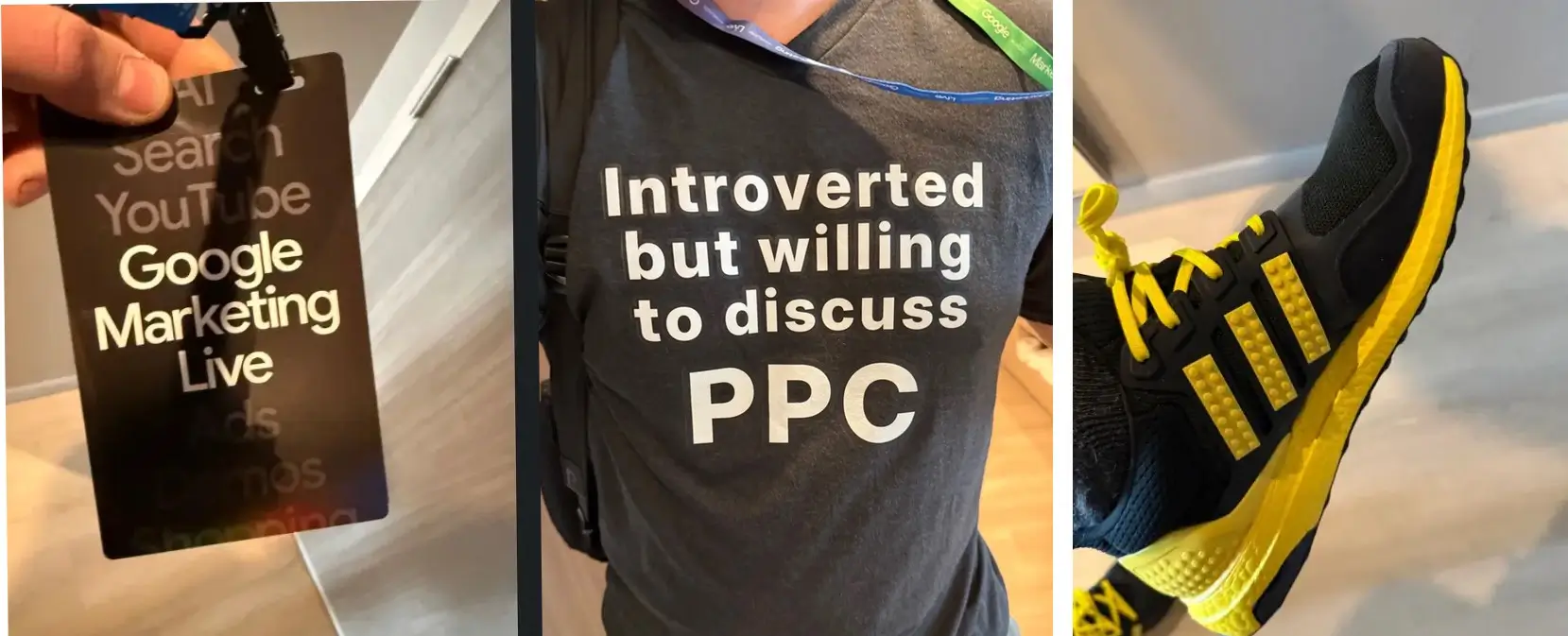
I flew out to Google Marketing Live this week wearing my "Introverted But Willing to Discuss PPC" shirt, LEGO shoes, and a GML badge, which is about as on-brand as I'm capable of being at a conference. And while there was a lot to take in across the day, the announcement that's been sitting with me most since getting home is the continued push toward AI Mode in Search and what it actually means for keywords as a targeting mechanism.
There's a version of this conversation that I find a little exhausting, which is the "keywords are dead, get into the future" framing that tends to show up whenever Google announces anything AI-related. I understand why people say it, but I think it collapses two genuinely different things into one argument, and I want to try to pull them apart a little.
Two Things Are Happening in Search Simultaneously
Here's how I've been thinking about it, and I want to be clear that this is my read on what's happening rather than something Google confirmed explicitly at the event.
(1) The first thing is longer, conversational AI queries. Someone opens Gemini or AI Mode and types something like "I'm redecorating my living room and I want something that feels warm but not too rustic, what should I be looking for?" That's not a keyword. It's a paragraph, and it's likely to include another 20 prompts in which the AI and the user are creating a solution... together. Keyword targeting is nearly irrelevant for queries like that (themes or topical targeting is another potential here, but that also has its weaknesses), and I think anyone arguing otherwise is fighting the wrong battle. The search terms that surface from those conversations don't exist in any keyword list anyone has ever built, and they never will, because they're generated in the context of a private conversation that no two people are having the same way. And that doesn't even include the concept of how to report for users uploads such as images or video, again... how are you going to tell which ad to trigger for THAT??
For that kind of search, more automated campaign types with AI-driven matching are the right tool, and fighting that reality seems like a losing proposition.
(2) But, the second thing is short, succinct "action now" queries. "Best newborn photographer near me." "Billings Montana plumber emergency." "Standing desk under $400 fast shipping." These searches are still happening constantly, they're not going away, and keyword targeting is highly relevant for them because the intent is specific, the user is ready to act, and the difference between showing up and not showing up for that exact query is often the difference between getting a customer and losing one to a competitor.
My wife is a newborn photographer in Billings (oh yeah, I threw her a link there ;) , and I think about her situation a lot when this conversation comes up. She doesn't have a large budget. She doesn't need a broad AI-driven prospecting campaign reaching people who are tangentially interested in newborn photos someday. She needs to show up for the handful of people in her area who are actively searching for a newborn photographer right now. Exact match keywords, deliberately chosen, fully covering the short and specific queries that represent real buyers, that's the tool that makes sense for her, and I think it makes sense for a lot of SMB advertisers who are in a similar position.
"But Kirk, there are many other targeting signals now, not just keywords" Yeah, and you know what is the limitation of MANY of those signals?? Volume. One of the reasons why specific, lower funnel keywords are still so powerful is because you can specifically choose high intent terms regardless of volume. That's the beauty of well thought through keyword targeted campaigns in Small Advertiser accounts. It is the surgeon's scalpel rather than a chainsaw.
Why I Think Both Need to Coexist
The framing I keep coming back to is that these are genuinely two separate products serving two separate user behaviors, and I think it would be a mistake to build a search advertising strategy that optimizes only for the longer conversational path and treats short, direct queries as a rounding error.
Part of my thinking here is behavioral. People are, in many contexts, lazy searchers. They don't want to type a paragraph when three words will do, especially on mobile and especially for local searches where the intent is immediate. Ironically, as AI automation gets better and people trust it more for complex research tasks, I actually think it may reinforce the habit of using short, precise queries for the things they know exactly what they want, because the AI handles the exploration and the keyword handles the transaction.
I'll acknowledge that these two behaviors sometimes blur together. A longer conversational query can move into purchase territory. A short query can be the start of a research process. And when people push back with "but these two things mush together all the time," I don't entirely disagree, but I'd put that overlap into the conversational/AI camp rather than letting it become an argument against maintaining precise keyword coverage for the clearly transactional queries. The overlap doesn't eliminate the distinction, it just means you need to be thoughtful about where each tool is doing what job. My overarching opinion here is not that it doesn't get messy sometimes, but that there is only so much market share conversational, truly AI Multi-Modal searches will take... there is still a place (and significant volume) for the short search query.
What I Hope Google Actually Does
My genuine hope coming out of GML is that Google honors both of these as distinct search behaviors by building campaign structures and reporting that treat them separately rather than collapsing everything into a single automated system that handles both imperfectly. The AI Max for Search direction feels like it's trying to address the conversational layer, and I think that's the right instinct. What I'd love to see alongside it is a continued commitment to exact match keyword campaigns for the direct, bottom-funnel, high-intent queries that have always been where SMB PPC finds its best return.
Whether Google sees it that way, I genuinely don't know. The trajectory of the last few years has been toward consolidation and automation, and there are moments where it feels like exact match keywords are being gently nudged toward obsolescence even when the data doesn't support that outcome for certain account types. Time will tell, and the data will tell us before Google does, which is usually how these things go.
In the meantime, if you want to dig into how we're thinking about campaign strategy in the current environment and specifically how to think about keyword-based campaigns alongside more automated formats, there's quite a bit on the blog worth exploring. The short version of my position is that the obituary for search keywords is premature for anyone who has a specific, high-intent audience they need to reach reliably, and I'll be watching the data from AI Mode's rollout very carefully before updating that view. I guess we'll see over time, if that's how Google views it as well.


.jpeg)