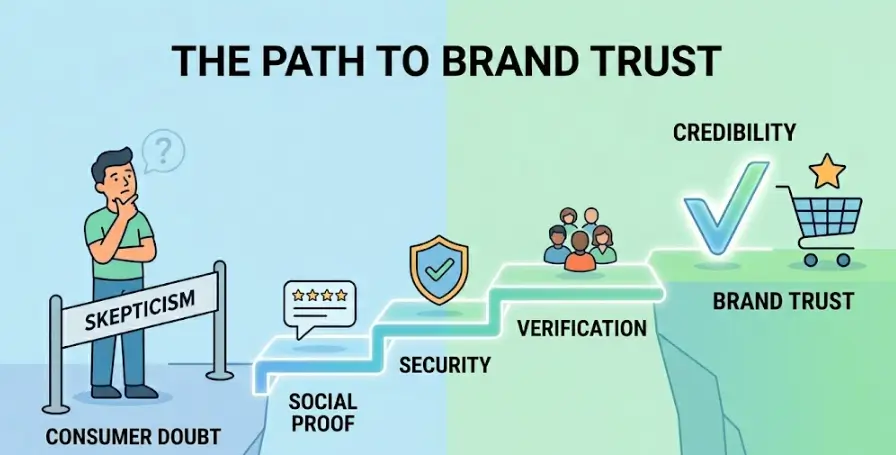
.webp)
Why Trust Signals Are No Longer Optional: Building Credibility in a Skeptical Digital Economy
During the internet's earlier days, users generally accepted digital content as truth. The prevailing sentiment was that this vast information emporium only housed verified facts. Yet, as the digital landscape matured, the realization dawned that anyone could publish anything, shattering the illusion of the web as an infallible source of truth. Today, we are inundated with half-truths and fabrications masquerading as reality, often bolstered by convincing video evidence. This climate of skepticism has reached a fever pitch; we have arrived at a juncture where discerning fact from fiction is nearly impossible, a reality that deeply impacts every stage of the marketing journey.
How Digital Skepticism Is Reshaping the Consumer Research Stage
In an era where digital skepticism has become the default setting, consumers navigating the research and consideration stage are no longer easily swayed by a brand's self-proclaimed virtues. As supposedly reputable online sites become exposed as scams, shoppers now find themselves caught in a cycle of doubt, constantly questioning whether a product truly delivers on its promises or if a brand is feeding you a bunch of lies so you will "add to cart."
Social Proof Has Gone from Buzzword to Business Requirement
While social proof has long lingered in the marketing lexicon as a common buzzword, its significance has recently escalated into a modern necessity. Today's buyers are actively seeking a collective consensus, turning to the shared experiences of those who have already bought and interacted with a product. They utilize reviews to cultivate their own perspectives, relying on the aggregate voice to determine their ultimate emotional and practical alignment with a brand.
Why Brand Reviews Are Now Essential — for Humans and AI Alike
If you are a brand that does not house recent reviews on your website, I ask you to reconsider that decision. Brand reviews are not only becoming increasingly commonplace in the purchase decision — they are practically essential. Except now, it isn't only humans who are scanning these reviews line by line — increasingly LLMs are also looking for this information when asked a question about a brand. Social proof sites, like Trustpilot, are becoming pivotal in the user journey. We see them pop up again and again as search terms in brand campaigns. Users are not only looking to see how well a product is reviewed, they are looking at the reputation of a brand as well before placing an order. For more on how AI is changing the search landscape, this piece on whether keywords are dead is worth your time.
What Does Your Website Say About Your Brand's Trustworthiness?
What does your website say about you as a brand? Can you be trusted and are there verifiable trust signals readily available on your site — or does the consumer have to look for them? Having immediate, visible trust signals on your website is imperative in this age of internet scrutiny and using third party reviews is now the bare minimum. Consider also adding raw, unfiltered UGC (or user generated content) from customers using or opening your products. Make your reviews a streaming widget as opposed to static text.
3 Trust Signal Strategies to Implement on Your Website Today
1. Be Reachable
Add a footer at the bottom of every page on your website that includes your physical business address, support phone number and email address.
2. Show You Are Actual Humans
Use actual employee pictures in your "about us" section and include real, verifiable information about the company's founder — if applicable.
3. Reduce Purchase Risk for the Consumer
On your product pages, make sure to include any wording of guarantees you provide and return policy links near your "add to cart" section. Make sure your user's payment information is safe and encrypted and inform them of it.
The Bottom Line: Transparency Is Now a Survival Strategy
Building and maintaining a repository of verifiable trust signals is no longer an optional marketing strategy but a fundamental requirement for survival in a skeptical digital economy. By prioritizing transparency through third-party reviews, raw user-generated content, and clear business credentials, brands can bridge the growing gap between corporate claims and consumer belief. Ultimately, consumers don't trust what a brand says about itself anymore — however, they still do trust what everybody else says (for now).
If your brand's paid campaigns need to work harder in this environment, our team can help.