.webp)
Before You Let AI Loose in Your Google Ads Account, Read This
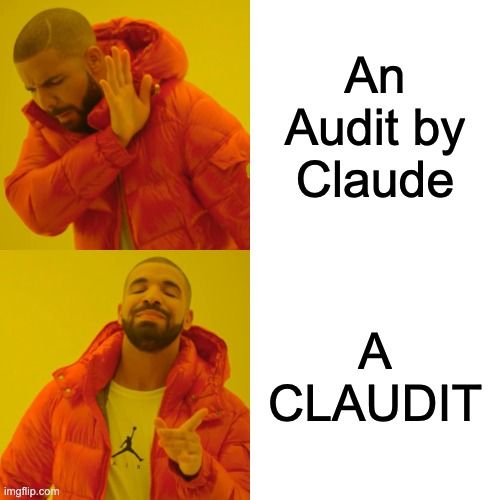
There's a growing buzz right now around using Claude (and other AI tools) to audit PPC accounts, and I get it, I really do. The idea of feeding your Google Ads data into an AI and getting back a comprehensive analysis in minutes instead of hours is genuinely exciting. I've been experimenting with it myself, and I've started calling these AI-powered audits "Claudits" (trademark pending, obviously) because, well, it amuses me and I think we need a word for this thing that's happening. But the more I've played around with this process, the more I've realized there are two significant problems that almost nobody is talking about, and that lack of conversation, from what I've observed, is a real problem.
(1) The Security Question Nobody is Asking
Let me start with the one that keeps me up at night. I recently watched someone publish a full walkthrough showing how "anyone can audit any Google Ads account with Claude, here's how!" and they walked through the entire process without once mentioning security. Not once. And gosh, that scares me...
Your Google Ads account contains sensitive business data. Campaign spend, targeting parameters, conversion data, audience segments, customer acquisition costs... not to mention just the valuable data from spend and traffic numbers all those years! This is the kind of information that, in the wrong hands or stored in the wrong place, could genuinely harm a business (and/or help a competitor). And I'll be the first to admit that I don't fully understand all the ramifications of running private client data through AI systems.. but I know it shouldn't just be ignored. I think there are layers to this (data retention policies, how models are trained, where information is stored and processed) that most of us in the PPC world haven't fully grappled with yet. Even localizing Claude seems to come with its own set of complications that I'm not entirely certain I can articulate well enough to do them justice.
What I do know is this: the fact that we're not even having the conversation is the biggest problem. If you're an agency running client data through AI tools without understanding what happens to that data, or without disclosing it to your clients, I think you're walking into territory that could get very uncomfortable very quickly. I'd love for someone with deeper expertise in data privacy and AI infrastructure to weigh in here, because this matters more than most of us realize. Feel free to comment on the LI post I originally made that spawned this post!

(2) The "Best Practices" Aggregated, Averaged BLAHHHHH Response Trap
Here's the second issue, and it's the one I find myself thinking about most often. When you run a Claudit, you're essentially asking AI to evaluate your account against an aggregated set of "best practices" that it has absorbed from, well, everything it's been trained on historically. And on the surface, that sounds wonderful. Who doesn't want their account measured against best practices? On the surface, there is some value there for sure!
But here's where it gets tricky, and I think this is something the best PPC managers intuitively understand: ideal best practices are a starting point, not a destination. The truly skilled account managers I've worked with over the years share two qualities:
- They understand what the textbook (industry "best practices" and all of us loud ""PPC influencers"" on social media) says you should do, and
- they have the judgment to know when their specific account, with its specific goals and its specific history and its specific market dynamics, needs something different.
A Claudit doesn't have that context. It can't know that your weird campaign structure exists because you tested fourteen other approaches and this one actually works for your bizarre niche.
It can't know that your "too high" CPC is intentional because you've discovered that those expensive clicks convert at three times the rate.
It's a bit like an agency parachuting into an account and running a quick automated audit of the mechanics without ever asking why those mechanics are set up the way they are. Sometimes, the mechanics are that way for a reason.
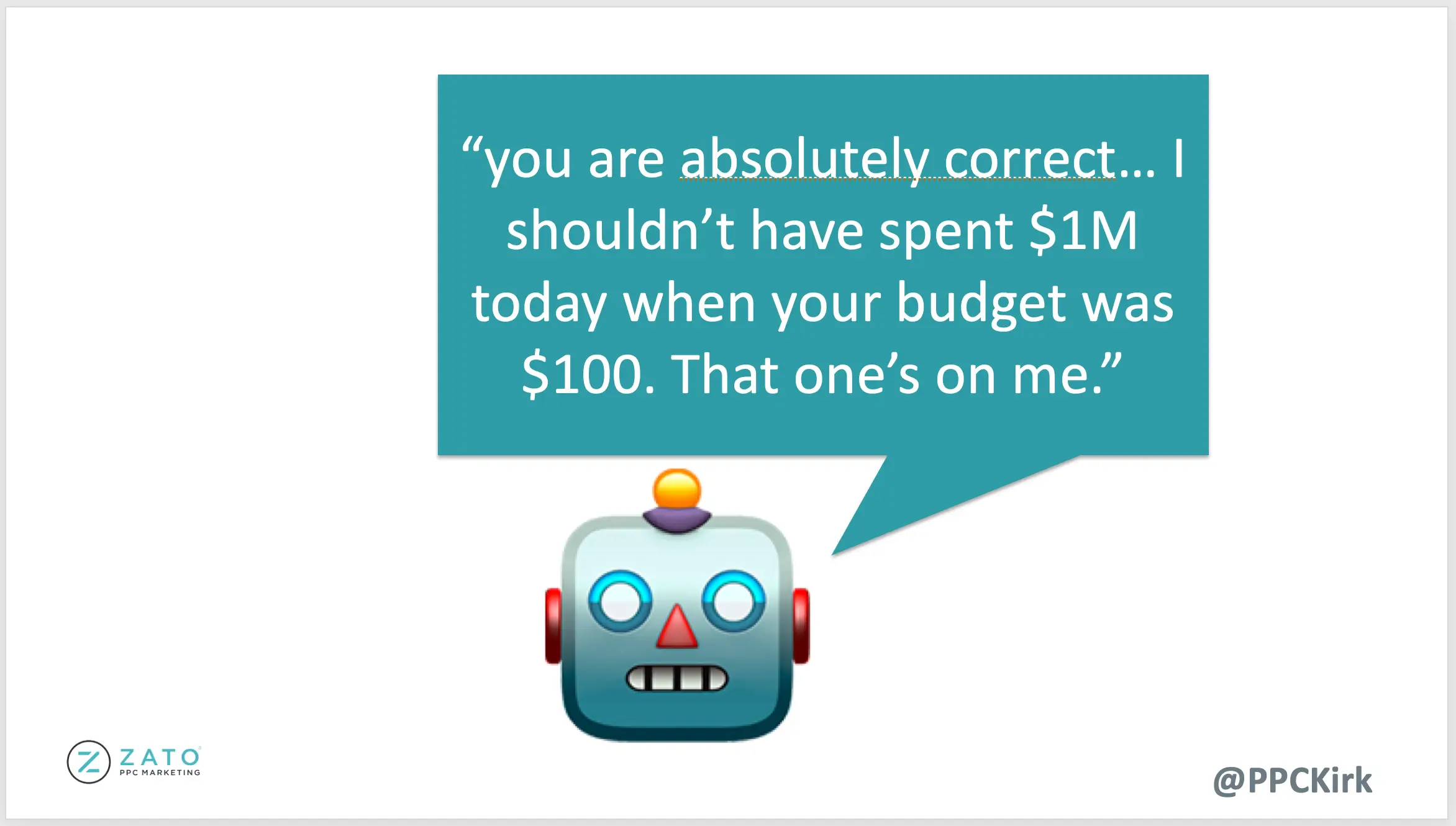
We recently had a client bring to us a Claudit one of their stakeholders had run on the account, and the vast majority it sounded great... and was totally wrong about the account. It just didn't have the necessary contextual information it needed from our team actually doing the work.
I'm not saying there's no value in AI-assisted account analysis (there absolutely is, and I've found genuinely useful insights through this process). What I am saying is that treating a Claudit like gospel without layering in the human context, the strategic reasoning, the institutional knowledge that lives in the head of the person who's been managing that account day after day... that's where things go sideways.
So What Do We Actually Do?
If you're going to use AI to analyze your PPC accounts, here's my $0.02 on the order of operations:
First, solve the security problem.
Understand where your data is going, what's being retained, and whether your clients or stakeholders are comfortable with that.
Second, identify the gaps in context.
This should happen before you act on a single recommendation! What does the AI not know about this account that would change its analysis? Because I promise you, those gaps exist, and they matter.
AI is an incredible tool for finding opportunities. It's just not a replacement for the human judgment that knows which opportunities are actually worth pursuing.


.jpeg)