.webp)
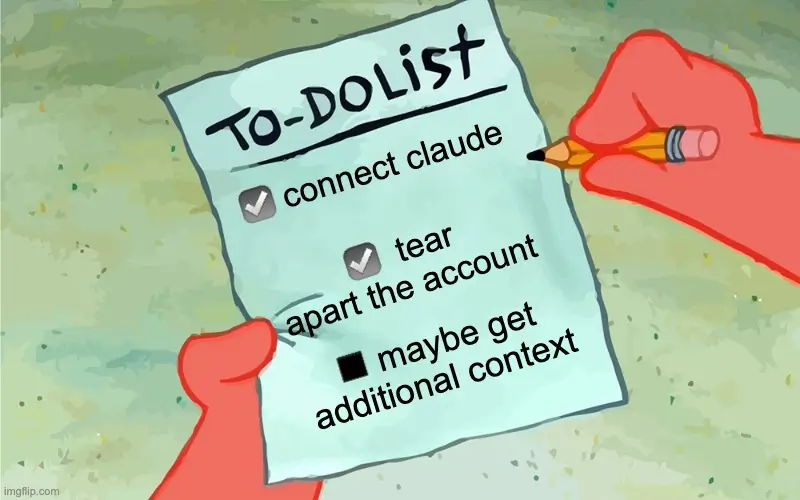
The reason there is risk in both (a) connecting Claude up to a Google Ads account for optimization suggestions and (b) asking a third party agency to audit an account for optimization is the exact same (the *reason* is the same, btw, not the level... but more on that later):
1) neither has all of the necessary context for that account to determine if the changes made are actually helpful or harmful to the entire business
2) both are making assumptions that their best practices, and management methods are the "correct" ones in Google Ads... and yet, increasingly the "best practices" are thrown out the window for the good of the account I.e., sometimes "XYZ is what actually moves the needle in this account whether someone somewhere wrote a blogpost arguing against XYZ or not."
BTW, notice I did not say connecting Claude or getting an external audit is "always a bad idea" but that there is inherent "risk" involved. The "risk" is that the audit's assumptions and proposed solutions (whether by human or Claude), will actually be MORE harmful to the account than leaving it in its "less than ideal" state.
I see this more in 2026 than I did in 2016. It used to be easier to tell if someone had a "poorly made" account by looking at the structure, keywords selected, etc. Now, it's trickier. You may not like that there is one Pmax campaign targeting all products that is doing an incredible job, but the burden is on the new agency to actually IMPROVE upon that... it's easy to sell the improvement, it's harder these days to improve with changes. Harder, not impossible. I'm not advocating for doing nothing, as there are absolutely still ways to identify and reduce inefficiency, wasted spend, etc.
But, crucially, my main point remains: an audit or a Claudit are both making the assumption that your assigned rules to determine quality are *always* valid. And that's just not the case. Sometimes, accounts are weird.
This is why such a huge part of account auditing IMO, should be focused less on immediate conclusiveness "here's the setting that is set up incorrectly" and more about questions and contextual gathering, and THEN moving the needle on the big picture of what needs to change (before ever getting to the "how exactly" we change the account).
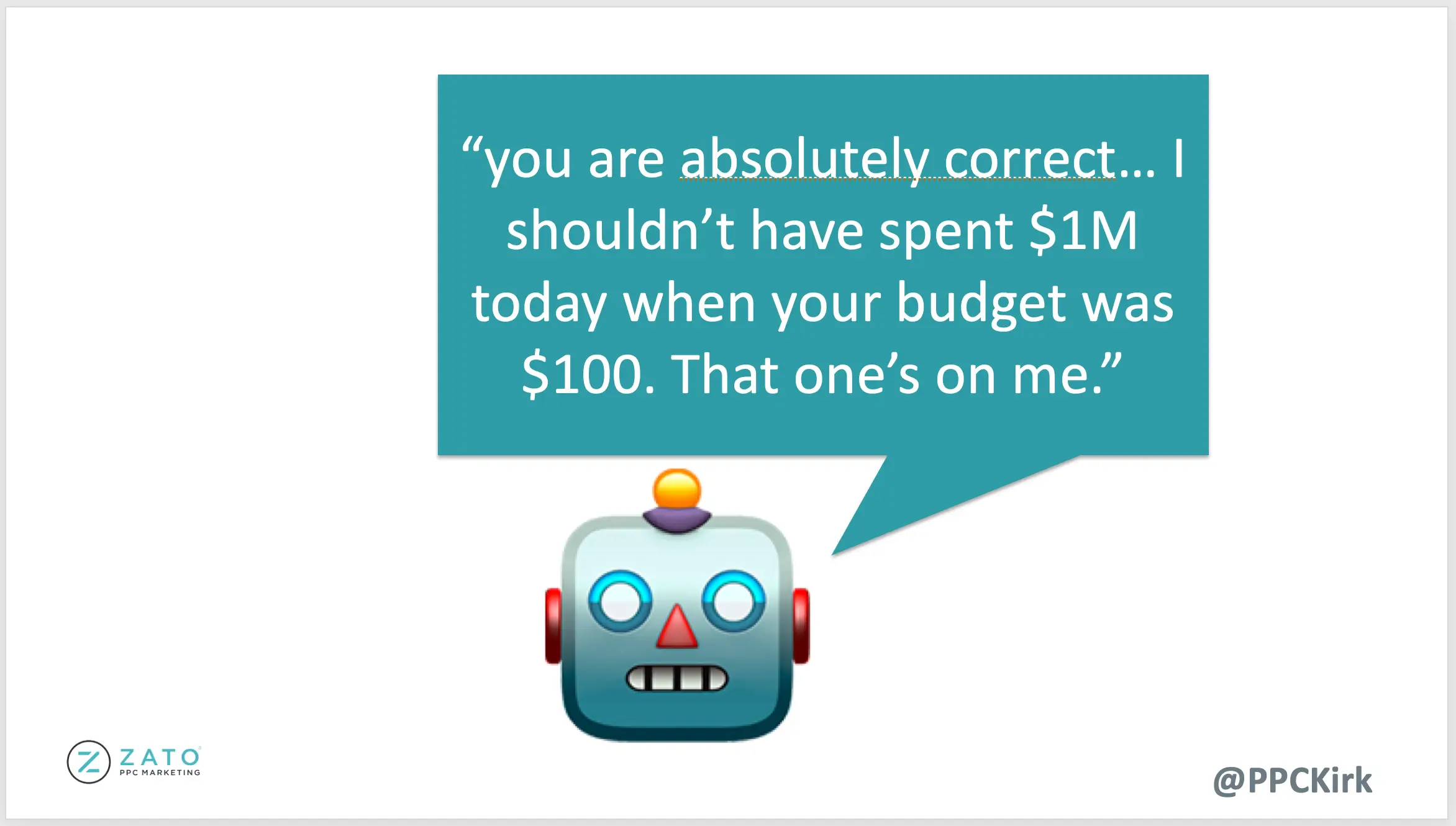
Mkay, then a quick shot at AI: while the root of the risk is the same, IMO the magnitude of getting this wrong with AI is greater, than with a human... because a (good) human auditor can be naturally more flexible, whereas when you build an AI auditing agent, you are essentially hardcoding your SOPs into its system instructions. It will strictly tell you what setting is wrong according to the rules of its prompt. So perhaps the takeaway, from an agentic building perspective, is to focus on training them to rely LESS on rigid rules only, but to become more and more aware of contextual clues. I'm getting in over my head here, so let's hear from the people who are actively building AI next... what do you think
🎉 SAVE 50% NOW: The Google Ads Course Built for DTC Brand Operators - Learn more


.jpeg)