.webp)
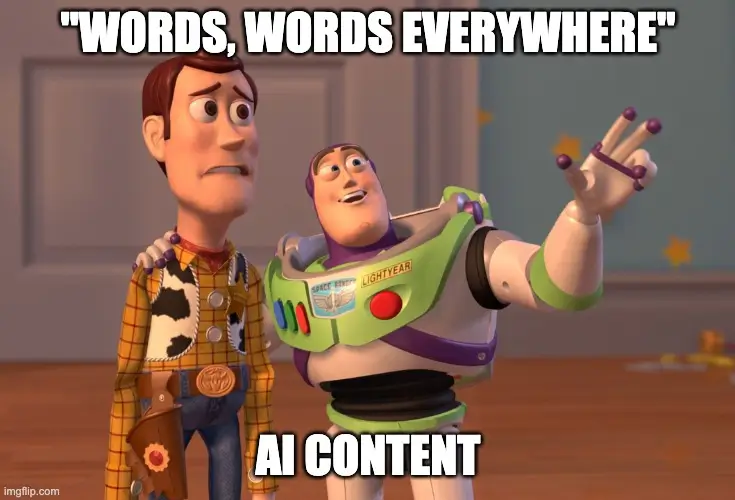
I think there are two ways AI is used to generate content, and this explains why we sometimes hate AI content and sometimes don't mind it at all. The difference isn't whether AI was used. It's how.
Here are the two ways I see it:
1) AI can be used to offload the cognitive labor to the reader
2) AI can be used to ease the cognitive labor for the reader
In Number 1, the burden gets pushed onto the reader. Sometimes it looks like what the Harvard Business Review called "workslop," where you have to wade through paragraphs of bloated, meandering text to find a point that could have been made in two sentences. Other times it looks like what I call unreasonable delegation, where the AI makes specific, significant requests of the recipient that a normal human would never make in that context. You end up with more work than if two people had just tried to figure out the problem together directly. The AI didn't help anyone. It just redistributed the effort onto the person least equipped to push back on it.
In Number 2, the labor is eased for the reader because AI is being used to refine, shrink, or clarify the point an expert is actually trying to make. This is closer to how I use it. I think of AI more as an editor than a creator. There are plenty of times I'm not entirely sure what point I'm trying to make, and AI helps take my jumbled thoughts and surface the actual idea underneath them. Then I edit that draft, bring it back to AI to shrink and sharpen further, and eventually something publishable comes out the other end that sounds like me and communicates clearly. The expert's knowledge and perspective still drives it. AI just clears the path between the idea and the reader.
The times people hate AI content are almost always Number 1 situations. Of course you hate it. It's giving you more work. It's asking you to decode something that should have been simple. It treats your attention as an inexhaustible resource rather than something worth respecting.
My hope in drawing this distinction isn't to defend AI content broadly, because a lot of it genuinely deserves the criticism it gets. It's to help us ask a more useful question when we encounter it: did this make the reader's job easier, or did it just make the writer's job easier at the reader's expense? Because those are very different things, and only one of them is actually useful.


.jpeg)