I gave a closing keynote at HeroConf in San Diego recently, and the core of what I said was less about tactics and more about philosophy: how do we actually think about where AI fits in PPC, and how do we avoid both the trap of ignoring it entirely and the trap of handing it the wheel?
Let me name the elephant in the room first: a lot of digital agencies right now are pouring significant time and client fees into building their own custom AI agents that are not actually resulting in increased client performance. Some of that work is, admittedly, actually interesting.
Some of it is primarily about reducing the agency’s workload while billing the same rate, and lots of it introduces real risk to client accounts: agents running with accidental budget misconfigurations, algorithm-disrupting structural changes made without enough context, bidding decisions made from a smaller signal set than the platform itself has (after all, when something goes wrong with an AI agent in your account, you bear that risk in failed ads, dollars spent, etc.... not the agency or the AI platform!).
That’s part of why I’ve been writing about AI in PPC with some caution.
So with all of my cautions well documented, I wanted to finally give a more philosophical, positive side of the framework together: here’s how ZATO thinks AI should be deployed, what we’re actively building toward, and why the framework is organized the way it is.
The short version of my position is that it’s not either/or when it comes to humans or AI. It’s both/and.
But “both/and” only works if you’re clear about which type of AI is doing which job, and where the AI sits in conjunction with the human. For us at ZATO, AI is the incredibly complex and amazing tool, but it's still just a tool that rises or falls on the expertise of the person/team who builds, deploys, fixes, redeploys, monitors, manages, and troubleshoots the AI making changes in your account. I believe firmly that there is still an incredible amount of labor that goes into a successful agent, but more than that, the success is depending upon the expertise of the individual running it... which actually incrases the value of that expertise (since automation based on an agent is more likely to run harder after the wrong thing if it's built or managed incorrectly... there are less checks and balances throughout than in a normal human driven system, especially in terms of the volume of autonomous changes an AI agent is capable of making beyond what a human can do).
How We Actually Think About, and Deploy, AI at ZATO
So everything rests on this notion, that we at ZATO believe AI is here to support our Google Ads expertise, and that we are stronger as an agency when we maintain seasoned human expertise as the primary strateegic executors, while utilizing AI in a supportive role. With this in mind, our ZATO AI usage looks like three categories:
Part 1: Platform AI for Execution. Let the Platform Do What It Does Best.
Part 1 is an interesting one for me, because I see virtually nobody discussing this online, but I actually think it’s both the most important and the most counterintuitive to the current conversation about AI in PPC.
That is, Google's (and Microsoft’s capabilities grow as well) native AI for bidding and targeting sees millions of data signals that no outside tool can access, AND Gemini is at the core of the Google Ads system (and has been around since Bard, which was the early precursor to AI... heck, PPCers have been deploying the early generations of AI longer than perhaps any other industry??). The maker of one of the big three AI platforms, actively deploys that to target millions of real-time user signals that thhird party AI's such as CLaude and ChatGPT do not, and will never, have access to! This is wildly important to understand, because a lot of what I see agencies building with AI these days is an attempt to "redo" what the Platform AI is already doing, but with fewer signals and less data into why a decision should be made.
Some of these signals are things like: user behavior across the entire web, purchase intent signals, device patterns, location data, audience overlap, browsing history, and real-time auction dynamics are all flowing through these systems simultaneously. When Smart Bidding is making a decision, it’s working with an information environment that is categorically larger than anything a third-party agent can replicate regardless of how well-engineered it is.
Therefore, when asked how ZATO is using AI in advertising: we absolutely include Platform AI as a deliberate tier in our framework, because we think it deserves to be recognized as the most sophisticated AI most PPC practitioners are actually working with every day! When you set up Smart Bidding with clean conversion data and clear targets, you are trusting AI that has access to more signal than any tool you or I could build.
NOW crucially, this does NOT mean that the Platform AI is the only version of targeting optimization that should be done (we're PPCers, of course we don't think we should just hand Google a bunch of cash with no guidelines!!), so this flows cleanly into (1) what human PPCers have always done, and more recently, how third party AI guardrails can be adequately used... and that's the next Phase of how ZATO uses AI.
Part 2: 3rd-Party AI for Guiding. Use AI to Help Guide the Platform.
The framing we are beginning to use for AI agentic execution internally is guardrails. It's like in soccer/football: the platform AI I noted above is the team on the field making real-time plays. Once the game starts, it's up to the individual players to make the best real-time plays to achieve their goal (ball in the back of the net)... but importantly, they have to abide by key guardrails. They can't go out of bounds, be offsides, hit the ball into the net with their elbows... there are rules that guardrail how the individual players can achieve their goals.
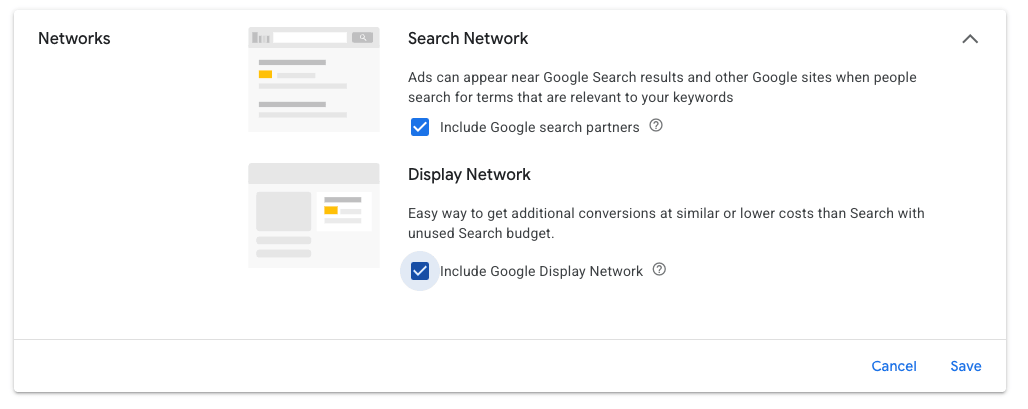
The human expert at ZATO, assisted by third-party tools, is responsible for defining the field, setting the boundaries, and keeping the platform on track. This is actually pretty important to be done well, because I've seen third party AI agents run AMOK in the account. They are no longer guard-railing and directing, they are micromanaging. "HEY I HAVE 560 million negative keywords to add that will help us ONLY target the audience we want to, do you want me to deploy them? Oh and I also suggest testing 780 new ads, and shutting off search partners in these campaigns... and 45 other suggestions (or changes if it's fully automated!) that completely overwhelm the real executing players on the field, the platform AI. They are no longer managing and guiding, the coaches are trying to BE the players... but they don't have the situational awareness on the field, and worse, the big changes they're making are too many and too often. One of the big concerns I have when I see extensive agentic work in an account is "how do you even know if your changes are contirbuting to real performance impact (negative or positive!) in this account, when SO many things are changing all the time?" And that's the reality here, third-party AI makes over-optimization significantly easier. In the past, a human adding too many negative keywords was self-limiting because it was tedious, whereas with AI, you can add thousands in seconds (will an expert PPCer consider and potentially reject the suggestion to add the thousands? Yes! But that gets exactly back to my point, the expert human is still needed at this stage!). The friction that used to act as a natural check is gone. So yes to third-party AI for guiding, but with actual expert judgment behind every consequential action.
This is why we have increasingly moved to a third party AI agent for guard-railing the platform decisions, as well as keeping it from going too far off base. One practical way we do this is by using tools like Optmyzr (Transparency: I'm not an affiliate! We have been with Optmyzr for almost a decade and they have been kind to me with pricing over the years for my loyalty, but I get no cash whatsoever by suggesting you use them! I just like what Fred and is team build :) for AI-assisted account monitoring and recommendations. Sure I've built some PPC agents to try different things for reporting and change suggestions, but one of the reasons I have steered back towards utilizing an LLM as a software service like Optmyzr, is because there’s a real engineering team behind the AI suggestions, which gives me more confidence in the security and deployment of what the LLM is surfacing. That's really really important to me.
Another place third-party AI earns its role in the guiding tier is in client troubleshooting and complex diagnostic questions. When we’re working through a difficult performance question, something that requires synthesizing data from multiple sources, understanding how different changes may have interacted with each other, or building a hypothesis about what’s driving an anomaly, we find LLMs genuinely useful as thinking partners in that process. The key is that a senior account manager is driving the conversation, evaluating what comes back, and making the final call.
But importantly, with all of this exciting deployment of third party AI, when we’re acting on AI-generated suggestions in live accounts, we want to know that those suggestions are coming from a system with meaningful human infrastructure built into it, not just a raw API call with my own (non-software background) prompts hoping I've thought of all the various agentic guardrails so it doesn't run amok. There are other systems out there as well, some people like Alfred Simon and Mike Rhodes are doing cool things in building entire frameworks on the back end that others can build agents off of as well. But these are the sort of thing it's really important to have nailed down when considering having an agent make, or even suggest, changes in your account.
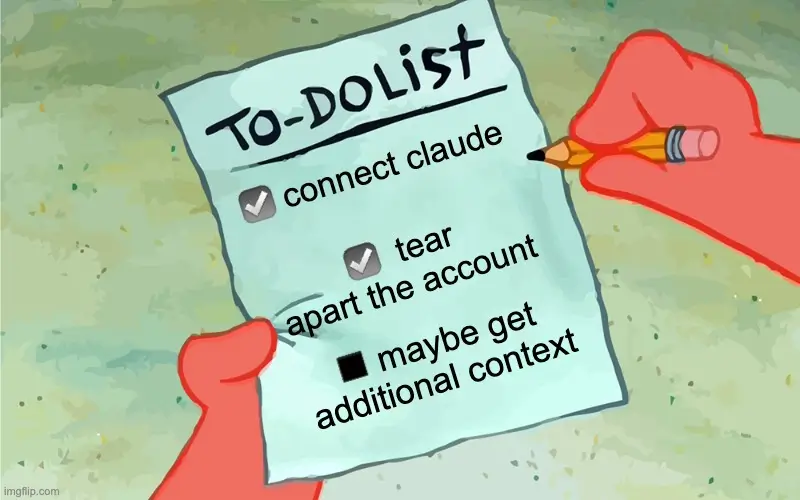
Sadly, I think this is where we're going to see a lot of brand operator PPC agent fail in the future. When you first connect Google Ads to Claude and ask for changes, you start getting the dopamine hit of cool suggestions. You FEEL like you are doing things by adding negative keywords, changing up your bidding and budgets based on what Claude told you to do, etc. But there is a danger that lurks underneath that we are beginning to slowly see, and I think we will see more in the next 12-18 months of Claude running accounts that mirrors what we see with AI in advanced settings... it sounds great until you realize it suggested something catastrophic (that didn't sound like a big deal), and suddenly the account is underperforming and nobody knows why.
Part 3: 3rd-Party AI for Admin. Use AI to Help With the Admin.
Finally let's talk the "brain" you here so much about. I personally think this is is where we’ve found the most consistent value, though transparently, we're still developing our own complex "AI brain". But we've found immense benefit in individual prompting around the brain idea (the comprehensive brain will come later after I keep perfecting it...).
The administrative layer of running a PPC agency is enormous: client communication, reporting, onboarding documentation, SOP development, deadline tracking, KPI monitoring, keeping up with what was promised and what was delivered, etc. This work matters enormously for any agency, or even any in-house role.
What we’re working toward in this tier, like most agencies right now, is building something like an agency brain: a centralized system that holds client context, communication history, account characteristics, and performance benchmarks in a way that makes our senior account managers more effective rather than just faster. What we have found immediate, undeniable value in is simply having a single source of administrative access that helps us better monitor and manage communications, make sure we’re aiming at actual client targets rather than proxies, and keep closer eyes on the KPIs that matter most. For instance, practically it's just easier to get all Shopify numbers, GA4 numbers, Ads numbers, and additional channel sources into one place and better monitor when key changes in the account lead to key changes in incremental value. Admittedly this isn't built out for every client, it's a work in progress! But it gives an idea of how I view the way that the human marketers can utilize the administrative side of things more sucessfully to actually impact real performance and account changes. When you’re managing multiple accounts and a senior account manager needs to quickly orient to what a client cares about most before a call, or flag that something in the account doesn’t match what was communicated three weeks ago, having that context centralized and accessible is genuinely useful even before and we've found that AI can be really helpful in just identifying those sort of things and surfacing them, whereas in the past that may have been missed by the human account manager. It's ways like that we've found individual success with AI at ZATO, and where I see us developing more complex AI solutions for in the future. We'll manage accounts better, when we understand the client better!
The Philosophy Underneath All Three
So there you have it, that's the 3-tiered system I see ZATO actually utilizing AI successfully in our client accounts, FOR their actual performance growth.
In closing, I'd like to call out a through-line connecting all three parts of this framework, and it's also imporatant to consider whenever the conversation turns to whether AI is going to replace PPC expertise.
The philosopher Michael Polanyi described tacit knowledge as “we know more than we can tell.” A true expert knows so much about their domain (i think this is the way our clients also have exeprtise about their businesses by the way!) that they can’t fully articulate all of it. This practically means, that you can never fully train an AI on an expert’s knowledge because the expert themselves doesn’t have complete access to it in articulable form! The pattern recognition built from years of actually being in accounts, the calibrated confidence that something is wrong before you can say exactly why, the ability to identify the real problem underneath the problem a client is presenting: these are marks of genuine expertise, and they’re what makes the AI output useful when an expert is guiding it. This is why such a key part of how ZATO manages AI (Platform and Third Party), is by ensuring we learn as much as possible and feed the correct information (as much as possible) about (1) the client's business and (2) our deep understanding of Google Ads tactics and strategy, so that we can then utilize the AI system built off of both of those things.
We’re actively building toward all three tiers of this framework because we think it’s the right way to incorporate AI into PPC work: trusting the platform for execution, guiding it carefully with third-party tools, and using AI to clear the administrative path so senior attention can stay where it matters. It’s a direction and a commitment as much as it’s a description of exactly where we are today.
That’s the framework we’re building around, and it’s the framework we will wield for our clients, and we'd love to wield for your account.
So, reach out to ZATO if you'd like to learn a little more about how we can help your Google Ads account with this phillosophy!