.webp)
In a performance-driven landscape, who you don't target is just as important as who you do. Don’t pay to show ads to existing customers, employees or even churned users. In PPC it’s important to make every dollar count. With Google’s recent expansion of audience segment exclusions to Shopping and Performance Max campaigns, you have more power than ever to fine-tune your reach. Let’s look at how to master these exclusions—and exactly when you should be using them.
While audience exclusions for search and display campaigns have been around for many years, Google recently introduced audience segment exclusions for Shopping & Performance Max campaigns. Read on to see how to implement customer exclusions and the best use cases for excluding customer segments.
How do you implement customer exclusions?
You can find the path to implementing these exclusions in the audience section within the campaigns menu. Google’s support article here walks you through that process.
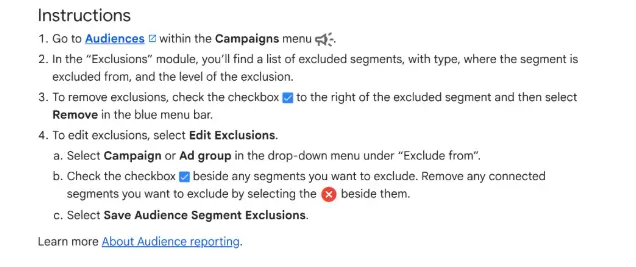
How & When to Use Audience Segment Exclusions
Google gives you a few different options for audience segment exclusions. For the purpose of this article, we will be primarily discussing the section marked “your audience segments.” This includes remarketing and customer match audiences. Though, the same principles apply across any of these audience segments. The purpose of these exclusions, again, is to eliminate ad spend that would otherwise be wasted on users who do not fit the criteria for an ideal customer. Primarily, most use cases come down to three guidelines. Let’s look at some examples.
New Customer Campaigns
This is probably the most obvious way to use customer segment exclusions. Google does some of this automatically if you are optimizing for new customers and you have your customer lifecycle optimization setup. You could also set this up at the campaign level through the steps described in the screenshot above. You can make the distinction as to if you’d like to exclude all website visitors as well as users who have made a purchase or submitted a lead form.
Segmenting Campaigns for Cross Sell & Upsell
Let’s say you offer multiple tiers of service and you want to advertise your higher service tier. This type of upsell campaign would be something you’d not want to advertise to your existing top tier subscribers, so this is an instance in which you would add that list of users as an audience segment exclusion.
Preventing Wasted Spend on Unqualified for Ineligible Users
Most of us have utilized this to some degree within remarketing campaigns for years. If you are running a remarketing campaign, you want to exclude users who have already made a purchase or submitted a form. However, what if you have a limited budget for non-brand ad spend? You could test potentially excluding users who have already visited your site. If you have a login portal and a lot of existing users are typing in your brand name to get there, you could also exclude these users from your brand or shopping campaigns to save additional clicks.
Conclusion
Audience segment exclusions are a simple yet powerful way to ensure your advertising budget is focused exactly where it belongs: on high-intent, prospective customers. By taking the time to layer these exclusions into your Shopping and Performance Max campaigns, you can stop paying for wasted impressions and start seeing better efficiency across your accounts. Whether you’re protecting your margins by excluding current subscribers or refining your prospecting efforts to filter out existing site visitors, this added layer of control is a must-have in any modern PPC strategy. Don't let your budget drift toward audiences that don't move the needle - start implementing these exclusions today and make every click count.