.webp)
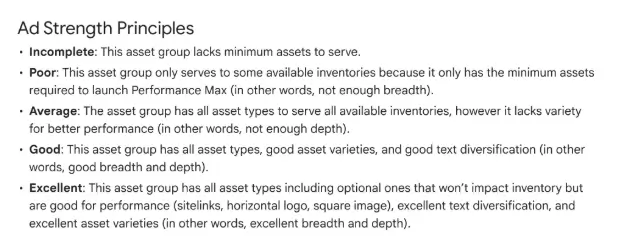
If you’ve spent any sort of measurable time within the Google Ads interface, then you know the struggle that is Ad Strength. Every time you go into an ad to edit it, Google assigns you a score from poor to excellent - each text asset entered making your case for your ad strength score. But what really is Ad Strength and does it matter?
The History of Ad Strength
Ad Strength appears to have been first introduced in this blogpost from August 27, 2018 as a real time feedback tool and new reporting column for (the also newly launched) responsive search ads. Initially it was designed only for responsive search ads, but since then different iterations have been rolled out to Performance Max and Demand Gen ads as well.
What is the Purpose of Ad Strength?
Google has always maintained that ad strength was used to measure the quantity, diversity and relevance of ad copy. According to their support article on ad strength, Google says, “ad strength is a tool that provides you with feedback to help you focus on providing the right messages to your customers.”
Is Ad Strength Important?
It’s important to note a few things about Ad Strength when judging its importance towards your marketing goals in a Google Ads campaign.
- It’s a Quantity & Variety Metric, Not a Quality Rating: Ad Strength measures whether you've provided enough unique assets (headlines, descriptions, sitelinks) for Google's machine learning to assemble dynamic ads.
- Ad Strength is not the same as Quality Score and is not used to calculate Ad Rank: Ad Strength is evaluated in the ad creation tool, whereas Quality Score measures actual post-launch performance (CTR, ad relevance, landing page experience) in live search auctions.
This being said, Ad Strength isn’t the ad performance indicator we all make it out to be - rather ad strength is more of a “System Inventory Checklist.”
How to Improve Ad Strength
Google writes an extensive help center document on this here. Ad Strength is primarily evaluated from the below three items.
- Asset-keyword relevance: headlines and descriptions incorporate relevant keywords
- The number of headline and description combinations: 15 unique headlines and 4 unique descriptions. Pinning limits these combinations and decreases ad strength.
- Sitelink Sufficiency: six or more sitelinks at the account, campaign or ad group level
Improving all three of these items can improve your Ad Strength score.
Do we Need to Optimize Towards Ad Strength?
You should approach Ad Strength as a functional guide rather than a key performance indicator. The ultimate goal of your copy is to convert human searchers, not to satisfy an automated meter. Ensure your headlines and descriptions appeal to your target audience and brand identity first, and use Ad Strength primarily to verify that you’ve provided enough unique combinations for Google’s systems to function effectively.
Conclusion
Ultimately, Ad Strength is a tool designed to support the machine, not to dictate the success of your business. While it offers a useful diagnostic for ensuring your campaigns have the necessary depth and variety to enter auctions, it should never overshadow your strategic goals. By focusing on your core marketing message and human-centric copy, you can satisfy the system’s inventory needs without losing the brand identity that drives real conversions. Use the meter as a guide for hygiene, but rely on your own expertise to build ads that truly connect with your audience.